Woody 99 - Sudoku Block Puzzle
Athena.StudioBoard
4.77.29K Reviews
- Version
- 2.2.17
- Installs
- 5.00M
- Age Rating
- Everyone
Screenshots
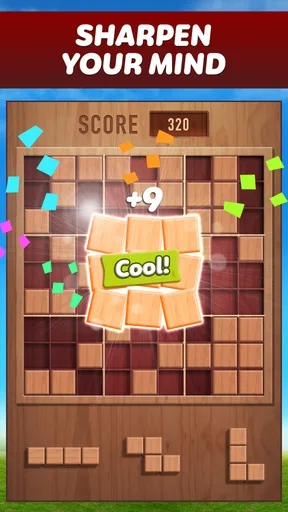
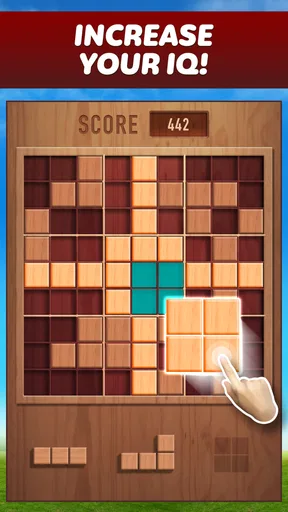
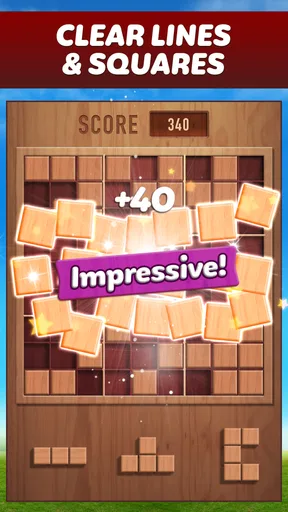
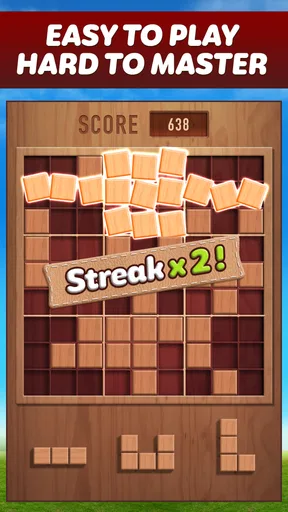

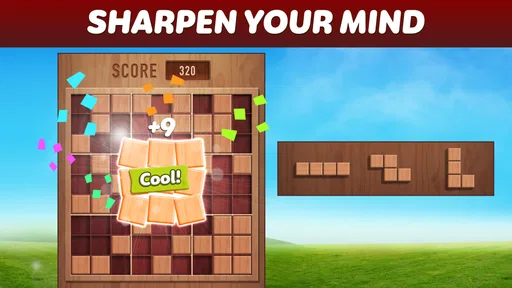
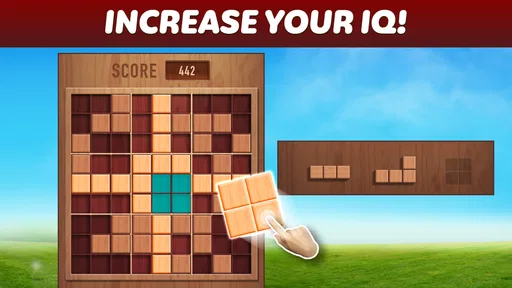
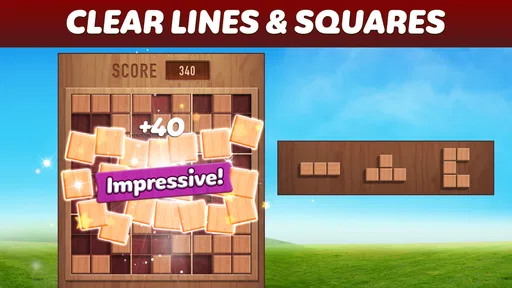
Our Review of Woody 99 - Sudoku Block Puzzle
 Analysis by Appyee
I came to Woody 99 - Sudoku Block Puzzle expecting a quick block game, but its presentation immediately pushed me toward a slower, more deliberate way of playing. It is a free board game from Athena.Studio that combines falling-block-style placement with the familiar logic of a Sudoku grid. The result is less about speed than about reading the board, finding safe spaces, and deciding whether a tempting move will damage the next few turns.
That distinction matters. This is not the kind of puzzle I would choose when I want a dramatic campaign, a story, or a competitive match against another person. I would choose it when I have a few quiet minutes and want something that keeps my hands occupied without demanding constant pressure. The wood-colored visual language, compact board, and measured rhythm all support that purpose. The strongest part of the experience is how consistently the presentation encourages careful thinking instead of frantic tapping.
The game is aimed at Everyone, so it is easy to understand at a glance. It has also built a substantial audience, with over 5 million installs, a 4.7 average from around 53 thousand ratings, and roughly 7.3 thousand written reviews. Those figures do not replace personal experience, but they do match my impression that this is a broadly accessible puzzle rather than a niche experiment.
A calm first impression that explains itself
The opening experience is refreshingly direct. I do not need to learn a complicated rule set before making a move. Blocks arrive in small groups, and I place them on the wooden-looking grid. Completing lines clears space, while the Sudoku influence makes the board feel more structured than a conventional block puzzle. The basic action is obvious, but the consequences become more interesting after the first few placements.
What I like about this design is that it creates a gentle learning curve without requiring a tutorial-heavy introduction. The first board teaches the central idea through play: leave room, think about shapes, and do not fill every attractive gap immediately. A new player can experiment freely, while someone familiar with block puzzles will quickly notice that the grid asks for more than simple line completion.
The visual style does much of the introductory work. Wooden surfaces and warm tones make the game feel closer to a tabletop pastime than a bright arcade title. That choice gives the board a clear identity, and it also makes the game feel appropriate for short breaks, evening relaxation, or a quiet moment away from more demanding apps. I found the look pleasant without feeling overloaded by decoration.
There is a useful trade-off here. The restrained design makes the puzzle easy to read, but it may feel plain to players who want animated effects, a strong narrative setting, or constant visual rewards. The game’s appeal depends on whether you enjoy the board itself as the main subject. I do, although I can imagine a player accustomed to flashy puzzle games finding the first few sessions visually modest.
The free entry point is another practical advantage. I can try the core experience without paying first, while optional in-app purchases range from $0.99 to $49.99 per item. That broad purchase range is worth keeping in mind before spending: the game is easy to sample for free, but anyone who dislikes optional purchases in casual games should approach the store elements carefully and decide in advance whether they want to buy anything.
Why the wooden look works
The art direction is not merely a surface applied to a standard puzzle. It changes how I read the board. A cold, neon interface would make each move feel more urgent, while the wood-inspired treatment suggests patience and physical pieces on a table. I naturally slow down, scan the available shapes, and consider the board as a whole rather than chasing the most immediate clear.
That mood also helps the game occupy a useful space between a toy and a brain exercise. It is light enough for casual play, but the Sudoku-style structure gives each placement a little more weight. I would not describe it as a formal training tool, yet it does encourage spatial planning, pattern recognition, and restraint. The mental effort is present without turning the game into a stern test.
One of my favorite small habits is to treat empty space as a resource rather than as a problem. When I see a large open area, I resist filling it simply because a piece fits. Instead, I look for positions that preserve several future options. This is especially important when a long shape or an awkward corner piece appears. The wooden presentation makes that process feel almost tactile, as if I were arranging pieces on a real board.
Setting, sound, and the rhythm of a session
Woody 99 does not build a conventional world with characters, locations, or story scenes. Its setting is the board itself: a small, orderly play space wrapped in a natural material theme. That narrow setting is a strength because it keeps attention on the puzzle. There is no narrative interruption to pull me away from the placement problem, and no fictional premise that needs to be remembered between sessions.
The atmosphere comes from consistency. The same visual idea carries through the board, the pieces, and the general tone, creating a coherent playable mood. I get the sense of a digital tabletop object rather than a miniature adventure. For this type of game, that is a sensible decision. The presentation does not promise more than the mechanics can deliver.
The pacing follows the same philosophy. A session can begin almost immediately, and I can stop after a short run without feeling as if I have abandoned a larger storyline. That makes it a good companion for waiting rooms, public transport, or a coffee break. In a realistic everyday scenario, I might open it while waiting for an appointment, complete a few careful placements, and close it when my name is called. The game suits that interruption-friendly pattern better than a puzzle built around long levels or timed rounds.
At the same time, the relaxed rhythm does not mean every moment is easy. The tension gradually comes from the shrinking board. Early moves feel generous, but careless choices accumulate. A piece that seems harmless can block the only comfortable route for a future shape. I enjoy that slow pressure because it gives the session a natural arc: calm opening, increasingly careful middle, and a late phase where every empty square matters.
Players who need constant speed may find the pacing too gentle. There is no reason to tap rapidly when the value comes from thinking ahead. That is not a flaw in the game’s own terms, but it is a clear mismatch for anyone seeking a fast reflex challenge. I would put it closer to a quiet logic pastime than to an action-oriented arcade puzzle.
How the audio supports the mood
The sound design works best when it stays in the background. Rather than competing with the board, it helps mark the simple actions of placing pieces and clearing space. That restraint fits the visual direction: the game feels more like a calm tabletop routine than a loud reward machine.
I appreciate this because sound can easily make a puzzle feel more frantic than it really is. Here, the overall rhythm leaves room for thought. I can focus on the shape in front of me, consider the next placement, and let the game’s feedback confirm the move without turning every clear into a spectacle.
For longer sessions, I would still treat audio as a personal preference. Some players will enjoy the added sense of completion, while others may prefer to play quietly in public or alongside music and podcasts. The game’s mood survives either way because the visual identity carries most of the atmosphere. That is a sign of a well-matched presentation: the experience does not collapse when one sensory layer is reduced.
Where the mechanics and presentation meet
The central mechanical fit is strong because the art direction and the rules ask for the same behavior. The wood theme tells me to take my time, and the board rewards exactly that. I place blocks, complete lines, and try to preserve flexibility. The Sudoku-style influence adds a layer of order that prevents the game from feeling like a purely improvised stacking exercise.
The most useful strategy is to plan for shape variety rather than only for immediate clears. A move that completes a line can still be poor if it leaves a narrow, unusable pocket. I often prefer a placement that does not clear anything yet but keeps several regions open. This is one of the game’s less obvious lessons: progress is not always visible in the number of lines removed. Sometimes the best move is the one that protects the next decision.
Another practical tip is to inspect all available pieces before committing to the first one that fits. The board can invite a quick response, especially when a piece seems perfectly suited to a gap. I have found that delaying that obvious move for a moment often reveals a safer arrangement. The habit is simple, but it changes the game from reactive placement into a small planning exercise.
I also recommend treating corners with caution. A corner can look like free storage, yet it may become difficult to use once the surrounding spaces are occupied. When a shape fits there, I ask whether it preserves a useful line or merely hides a problem. This approach is particularly helpful when the board begins to tighten and there are fewer ways to recover from an awkward arrangement.
These decisions make the game more thoughtful than its casual appearance suggests. Still, the mechanics have a natural limitation: players who want deep strategic control may eventually wish for more variety in objectives or a stronger sense of progression. The compact board is excellent for repeatable short sessions, but it also means the core loop carries nearly all of the long-term appeal.
That is where the comparison with usual alternatives becomes useful. A classic falling-block game emphasizes timing, rotation, and rapid reactions. Woody 99 is calmer and more spatially deliberate because I am arranging pieces on a persistent board rather than responding to a continuously descending stack. A traditional Sudoku app usually focuses on number placement and deductive certainty. This game is looser: it borrows the feeling of organized grid logic while keeping the tactile freedom of block placement.
Compared with match-three puzzles, it offers less immediate visual excitement but more control over the shape of the board. I am not waiting for a chain reaction to appear; I am responsible for building the conditions for a clear. That makes the game a better fit for players who enjoy planning and a weaker fit for those who want frequent surprises or spectacular combos.
Who will get the most from it
I would recommend it to someone who likes board games, block puzzles, or Sudoku but wants a less formal and more forgiving combination of those ideas. It works especially well for players who enjoy making one careful decision at a time. The Everyone age rating also makes its basic concept approachable for a broad audience, although younger players may still need help understanding why saving space matters more than filling it.
It is also a good choice for people who prefer games that respect interrupted attention. I can play for a short period, put the device down, and return later without needing to remember a story or coordinate with other players. That makes it useful as a low-pressure mental break rather than a commitment.
I would skip it if my priority were online competition, a campaign, character development, or a large collection of distinct modes. I would also look elsewhere if I wanted a pure Sudoku experience with numbers, clues, and a clearly defined logical solution. The hybrid design is the point, but it will not satisfy someone who wants either extreme in its most traditional form.
Practical expectations before installing
The game is free to start, and Athena.Studio is the developer behind it. It was released on November 26, 2019, and the current version is 2.2.17. On the platform side, it requires Android 7.0 or later. Those details make it a relatively straightforward option for people using a compatible Android device, especially if they want a lightweight board-style game rather than a large, story-driven download.
The purchase structure deserves a measured response. The range of optional items begins at $0.99 and reaches $49.99 per item. I would not install the game assuming that spending is necessary to understand its appeal; the free starting point is enough for an initial judgment. However, I would check the purchase prompts carefully and set a personal limit before playing if accidental or impulse buying is a concern.
Another question many players have is whether the game is relaxing or genuinely challenging. In my experience, it is both, but at different stages. The presentation is calm from the beginning, while the board becomes demanding as space disappears. That combination is more satisfying than a game that is either permanently effortless or relentlessly stressful.
It is also fair to ask whether the Sudoku element makes the game mathematically strict. I would not approach it as a replacement for a dedicated Sudoku app. The appeal comes from the blend: the grid creates order, while the blocks keep the decisions visual and flexible. If you enjoy number puzzles but dislike writing candidates or following fixed deductions, this may be a more comfortable alternative.
Finally, consider how long you want a game to remain fresh. The core loop is polished around repeatable board management, not around constant novelty. I can return to it because improving my choices is satisfying, but players who need frequent new mechanics may reach its limits sooner. That is the central trade-off: focus gives the game its calm identity, yet focus also narrows its range.
My atmosphere verdict
Woody 99 succeeds because its presentation understands the kind of play it is offering. The wooden visual language, restrained setting, supportive sound, and unhurried pacing all point toward the same experience: a quiet board puzzle that rewards attention. Nothing feels disconnected from the mechanics. The atmosphere is not decoration placed around the rules; it helps me approach those rules in the intended frame of mind.
I especially value the way it turns small choices into a steady rhythm. I can use it during a short break, play without a complicated setup, and still find enough tension to make the final placements meaningful. The best sessions leave me thinking not about how quickly I cleared lines, but about whether I protected the board from my own impatience.
There are clear boundaries. It is not a story game, not a social board-game replacement, and not the right choice for players who need fast reactions or dramatic progression. The optional purchase range also means I would play with spending awareness. Yet those limitations are easier to accept because the game has a clear purpose and follows it consistently.
For me, this is a recommendation with a specific audience rather than a universal one. If you want a calm, wood-themed puzzle that combines block placement with Sudoku-like grid thinking, it is worth trying for free. Its real strength is the coherent mood: every visual and mechanical choice encourages you to slow down, preserve space, and enjoy the next decision. I would install it when I wanted a thoughtful few minutes, not when I wanted a grand adventure—and in that role, it does its job very well.
Verdict
Strengths of Woody 99 - Sudoku Block Puzzle
- Simple drag-and-drop controls are easy to learn.
- Works well for short, casual gaming sessions.
- No time limit lets you plan moves at your own pace.
- Wood-themed visuals create a calm, relaxing atmosphere.
- Increasing challenge keeps the puzzle experience engaging.
Limitations of Woody 99 - Sudoku Block Puzzle
- Limited gameplay variety may feel repetitive over time.
- A poor move can quickly leave the board difficult to recover.
- Ads may interrupt the experience, depending on the version.
- The game offers little narrative or social interaction.
- Small blocks can be harder to place accurately on smaller screens.
Other Releases by Athena.Studio
View All
Woody Cross: Word Connect
Word4.6
Similar Picks in This Category
View All
Ludo King®
Gametion4.1

Ludo
Yarsa Games4.6

Tile Master® - Matching Game
Higgs Studio3.6

Checkers Online
CC Games4.6

Dominoes
Loop Games4.7

Chess
Chess Prince4.6
Frequently Asked Questions
What is Woody 99 - Sudoku Block Puzzle?
Woody 99 - Sudoku Block Puzzle is a relaxing puzzle game that combines classic block placement with Sudoku-style clearing mechanics. You place differently shaped wooden blocks on a grid and try to complete full rows, columns, or designated sections. The objective is to score as many points as possible while keeping the board open, making each move a balance between short-term clears and long-term strategy.
How do you play Woody 99 - Sudoku Block Puzzle?
Gameplay is based on dragging available wooden blocks onto an empty grid. Blocks cannot be rotated in the usual play style, so choosing the right position is important. Completing a row, column, or square removes the filled pieces and creates space for new shapes. The round ends when none of the offered blocks can fit, so planning several moves ahead is essential.
Is Woody 99 - Sudoku Block Puzzle suitable for beginners?
Yes, the game is easy to understand and does not require previous experience with Sudoku or traditional block puzzles. The interface is simple, and the first rounds help you learn how pieces fit and how clearing multiple lines can improve your score. However, later decisions become more demanding, especially when the board is crowded and the available shapes are difficult to place.
Can Woody 99 - Sudoku Block Puzzle be played offline?
The core puzzle experience can generally be enjoyed without a constant internet connection, which makes it convenient for short sessions during travel or when mobile data is unavailable. Some features may still depend on connectivity, including advertising, analytics, updates, cloud-related services, or promotional content. For the most accurate offline behavior, check the current store description and test the game after temporarily disabling your connection.
Does Woody 99 - Sudoku Block Puzzle contain ads or in-app purchases?
Like many free-to-download puzzle games, Woody 99 - Sudoku Block Puzzle may include advertisements and could offer optional purchases, depending on the version and platform. Ads may appear between rounds or when using certain bonus features, while purchases can sometimes remove advertising or provide additional assistance. Review the Google Play or App Store listing before downloading, particularly if the device will be used by children.
Play our best games!


